
As a professional SEO copywriter, I’ve often seen the myth that daily social media posts are essential for success. However, this approach can lead to burnout and decreased productivity.
A more effective marketing strategy involves planning and executing content that resonates with your audience without the need for daily updates. By adopting a strategic approach, you can maintain a strong online presence while also preserving your creative energy.

In this article, we’ll explore the benefits of moving away from daily posting and provide practical tips on how to market your business effectively without exhausting yourself. By the end, you’ll have a clear understanding of how to implement a successful marketing strategy that works for you, not against you.
Myth of Daily Posting
The idea that daily social media posting is essential is a widespread myth. It causes undue stress for business owners. Today’s digital world pressures businesses to stay active online.
Why We Think We Need to Post Daily
The drive to post daily comes from the belief it keeps us relevant and engaged with our audience. Yet, this focus on quantity over quality diminishes content effectiveness.
Many businesses feel they must post daily to avoid being forgotten. However, this fear is often unfounded. The truth is, quality content trumps frequency.
Burnout Reality for Business Owners
Keeping up with a daily posting schedule is draining, leading to burnout and reduced productivity. The constant need to create content overwhelms business owners, affecting their mental and physical well-being.
| Consequences of Daily Posting | Impact on Business Owners |
| Burnout | Decreased productivity and mental health |
| Decreased Content Quality | Loss of audience engagement |
What Algorithm Changes Really Mean for Posting Frequency
Algorithm changes profoundly affect our social media posting strategies. Instead of daily posting, focus on creating high-quality, engaging content that resonates with your audience.
By grasping the impact of algorithm changes, businesses can refine their social media strategy. This shift emphasizes creating content that boosts engagement and drives conversions.

Quality Over Quantity: The Strategic Approach
In today’s digital world, success in marketing isn’t about posting often. It’s about the quality of those posts. Understanding the modern algorithm’s preferences is key to digital marketing success.
Understanding Modern Algorithm Preferences
Modern algorithms favor content that sparks meaningful interactions. This means focusing on posts that encourage engagement, not just quantity. By doing so, brands can boost their brand visibility and foster a more engaged online community.

Engagement Metrics That Actually Matter
Not all engagement metrics are equal. While likes and followers are tempting, they don’t always mean real engagement. Instead, focus on metrics that truly matter, such as:
- Comments that spark meaningful conversations
- Shares that expand your content’s reach
- Saves that indicate your content’s value
Meaningful Interactions vs. Vanity Metrics
The distinction between meaningful interactions and vanity metrics is critical. Vanity metrics may boost your ego, but meaningful interactions drive real results. By creating content that sparks meaningful interactions, you can build a loyal community that engages with your brand deeply.
By adopting a strategic approach to digital marketing, focusing on quality over quantity, and prioritizing meaningful interactions, you can enhance your brand’s online presence. This leads to long-term success.
Effective Marketing Without the Pressure of Daily Content
A well-planned content strategy allows you to market effectively without daily posting. By focusing on strategic content creation and efficient management, you can maintain a strong online presence without overwhelming your audience.
Creating a Sustainable Content Calendar
Developing a sustainable content calendar is crucial for maintaining a consistent online presence. This involves planning and scheduling content in advance, ensuring it aligns with your overall marketing goals. To create an effective content calendar, consider the following:
- Identify key themes and topics relevant to your audience
- Plan content around significant events, holidays, or industry trends
- Use a mix of promotional, educational, and engaging content
By doing so, you can ensure a balanced content strategy that resonates with your audience and supports your engagement tactics.
Batching Content Creation for Efficiency
Batching content creation is an efficient way to manage your content production. This involves dedicating specific times or days to creating multiple pieces of content at once. Benefits of batching include:
- Reduced time spent switching between tasks
- Increased productivity due to focused work sessions
- Better consistency in content quality and tone
Tools to Streamline Your Process
Utilizing the right tools can significantly streamline your content creation and management process. Some essential tools include:
| Tool | Purpose |
| Hootsuite | Scheduling social media posts |
| Trello | Organizing content calendar |
| Canva | Creating visual content |
Strategic Timing for Maximum Impact
Timing plays a crucial role in the success of your content. By understanding when your audience is most active and engaged, you can schedule your posts to maximize visibility and interaction. Consider using analytics tools to determine peak engagement times and adjust your content calendar accordingly.
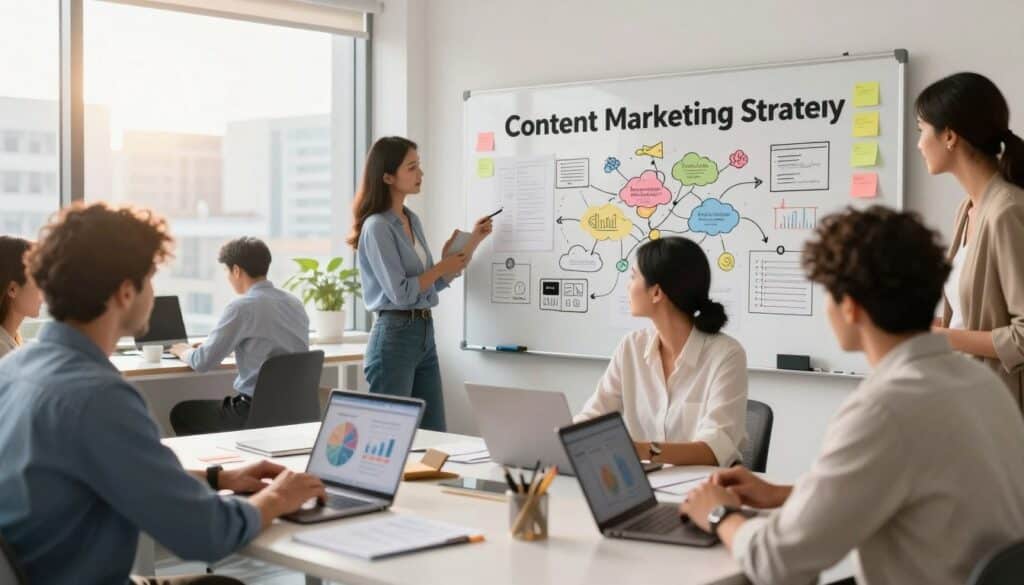
By implementing these strategies, you can effectively market your business without the need for daily posting. This maintains a strong online presence while optimizing your content management process.
Maximizing Impact with Less Content
Optimizing your content can greatly impact your social media presence without the need for daily posts. This method not only lightens your workload but also improves the quality and relevance of your content.
Content repurposing is a crucial strategy for maximizing impact. It involves transforming existing content into new formats to reach a broader audience or to refresh old content.
Content Repurposing Strategies
Repurposing content effectively involves converting blog posts into videos or infographics. This approach caters to various learning styles and expands your content’s reach across different platforms.
Extending Content Lifespan
To extend your content’s lifespan, consider updating old posts with fresh insights. This not only boosts the content’s relevance but also enhances its search engine visibility.
Platform-Specific Optimization Techniques
Optimizing content for different social media platforms is essential. For example, Instagram content may need a more visual approach, while Twitter content should be concise and timely.
Creating Evergreen Assets That Work for You
Creating evergreen content that remains relevant over time is a valuable strategy. This type of content continues to attract engagement and drive traffic to your site long after its initial publication.
By implementing these strategies, you can significantly enhance your social media management efforts. Your content will work harder for you, even when you’re not posting daily.
Building Engagement Without Daily Presence
You can create a vibrant community without being online all the time. This strategy demands a thoughtful approach, focusing on meaningful interactions over sheer volume. By employing effective community management tactics, you can keep a strong bond with your audience, even when you’re not posting every day.
Strategic Community Management
Effective community management is about making your audience feel valued and engaged. Achieve this by:
- Encouraging discussions with thought-provoking questions
- Responding to comments and messages quickly
- Sharing user-generated content to highlight your audience’s contributions
Leveraging User-Generated Content
User-generated content (UGC) is a potent tool for engagement. It not only lightens the load of content creation but also strengthens the bond between your brand and audience. Consider launching UGC campaigns or contests to prompt your followers to create content tied to your brand.
Automation That Feels Personal
Automation is essential for maintaining a consistent online presence without feeling overwhelmed. However, it must feel personal. Utilize automation tools to plan posts, but ensure to:
- Personalize automated messages
- Customize your content based on your audience’s preferences
Response Systems That Maintain Relationships
Setting up a response system ensures your audience feels heard. This can range from simple auto-responders on social media to more complex AI-driven personalized responses. The goal is to retain a human touch in your interactions.
| Strategy | Description | Benefit |
| Community Management | Encouraging discussions and responding to comments | Builds a loyal community |
| User-Generated Content | Running UGC campaigns | Increases engagement and brand loyalty |
| Personalized Automation | Using automation with a personal touch | Maintains a human connection with the audience |
By adopting these strategies, you can effectively engage your audience without needing to be online every day. This approach makes your social media efforts more sustainable and impactful.
Sustainable Marketing for Long-Term Success
In today’s competitive business world, a well-thought-out marketing strategy is crucial. It’s about quality over quantity. Businesses can keep a strong online presence while protecting their well-being by using the right tools and techniques.
A sustainable marketing strategy boosts content impact, engages the audience, and drives growth. It helps achieve business goals and builds a loyal community. This community supports the business for years to come.
Adopting a strategic social media marketing approach is key. It involves creating a content calendar, repurposing content, and using automation tools. These steps help personalize engagement, making the strategy both effective and sustainable.